writing
Download .md file

Sev Nightingale

I build and run production AI agents.

Relocating to DublinCritical Skills Employment Permit eligible

Scroll

01·Identity

Sev Nightingale

I'm Sev, a 30-year-old engineer settling in Ireland, and AI writes every line of my code.

I started building software with no-code on Bubble.io in 2023, where I learned to think like a programmer: data models, APIs, flows, auth, deployment. I switched over to Claude Code a week after it launched in March 2025. AI writes the code; I own the architecture, the product decisions, the debugging, and the deployment. These days, increasingly, I build and manage the agents that do the work themselves.

Contributions, last year

github.com/sevnightingale→
SunMonTueWedThuFriSatSepOctNovDecJanFebMarAprMayJunJulAug

02·Work

Selected Work

One claim, four pieces of evidence: I build and run AI agents in production. Inside a real company, in the open, and on my own infrastructure.

Agent Operations for an Engineering Org

Silvi Protocol

I'm the technical lead on Treekipedia at Silvi Protocol, and I direct Silvi's AI agent operations. In August 2026 I authorized the five-job daily agent pipeline that now runs the org's operational layer, plus a daily CI-testing agent that redeploys staging, runs the isolated backend suite, and reports every run into the team's own channels, paging a separate alerts channel on critical failures. I also rebuilt the knowledge substrate these agents run against: 21 canonical documents with machine-checkable verification frontmatter, a validator, and 50 tests.

6

Daily agent jobs

21

Canonical documents

50

Validation tests

The daily pipeline

ActivityEvidence

collects source deltas, publishes cited packets

ContextStewardship

reconciles canon and open questions

OperationsRouting

human commitments to Notion, agent work to Linear

MarketingDrafts

review-ready copy for the team

DebuggingBug records

production runtime evidence to Notion

CI testingsilvi-testing

redeploys staging, runs the suite, reports every run

Inside the systemsix daily agent jobs, canon with machine-checkable verification

Each job reports into the team's Telegram Agent Updates topic, with critical conditions paging Agent Alerts. The CI agent's preflight requires migration, SHA, and health proof before tests run, and failures deduplicate into the team's existing bug workflow with retained evidence. The canon the agents run against carries its own open questions in first-class sections with verification frontmatter, so re-verification is mechanical rather than heroic. Directing agents that other people depend on is a different discipline from building demos, and it is the one I practice daily.

Stack

Telegram·Notion·Linear·Django·TypeScript


AI-Powered Reforestation Knowledge

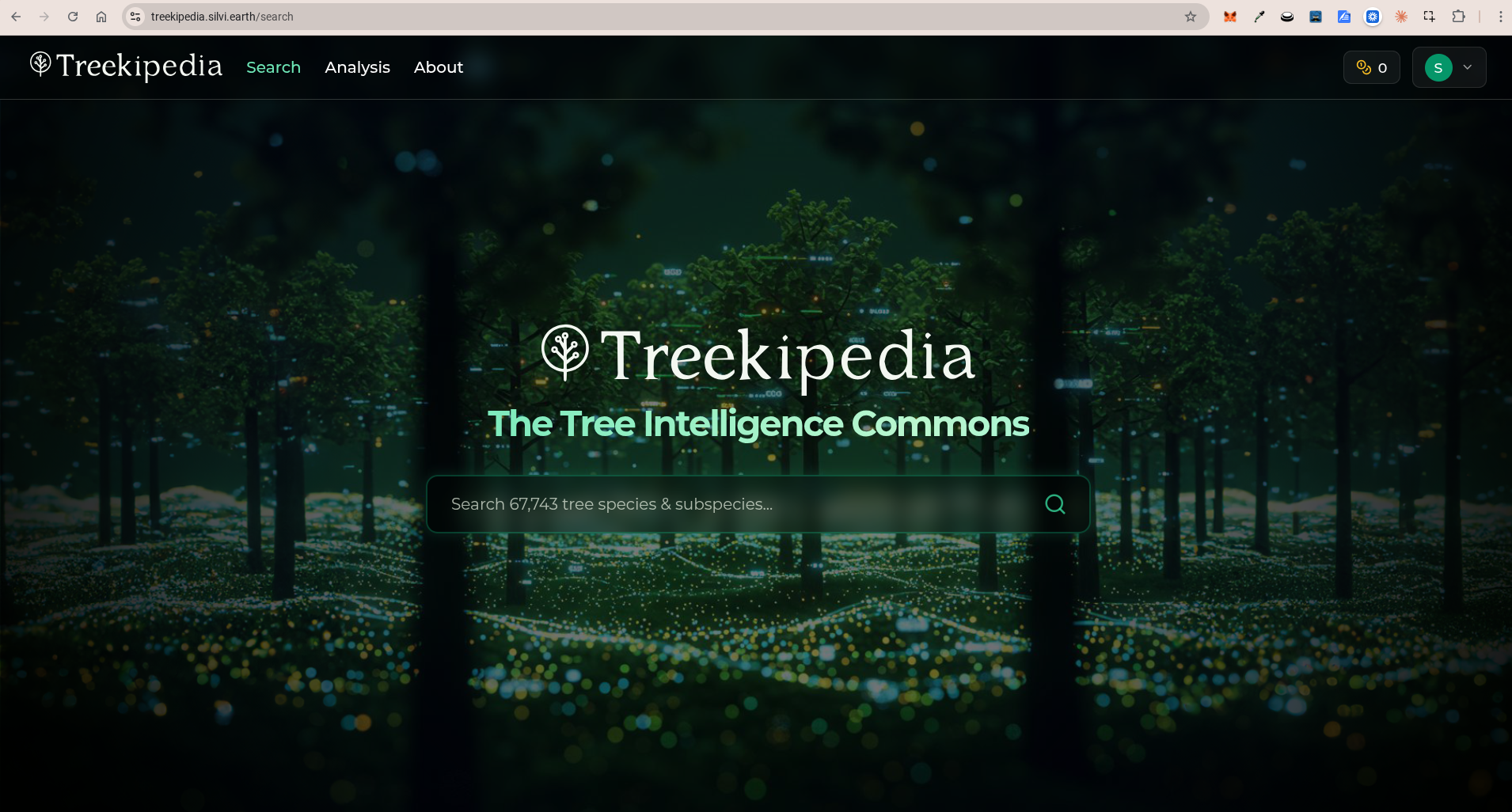
Treekipedia

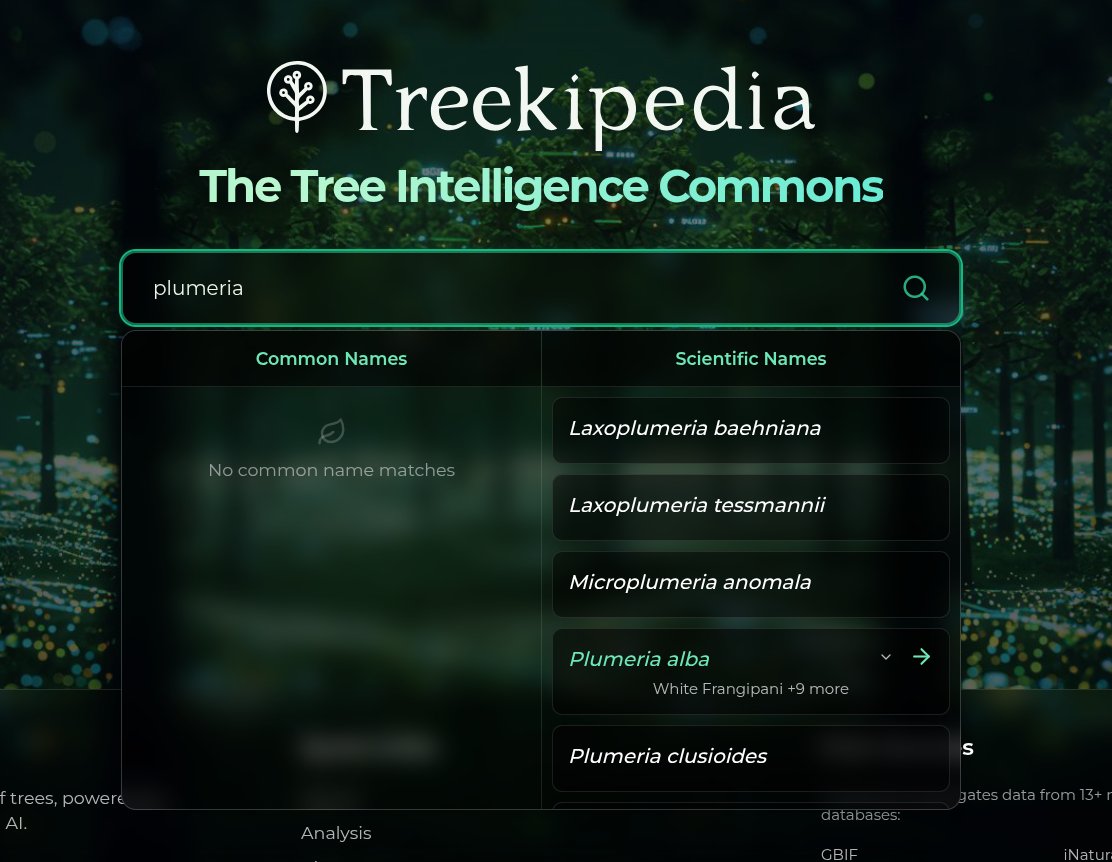
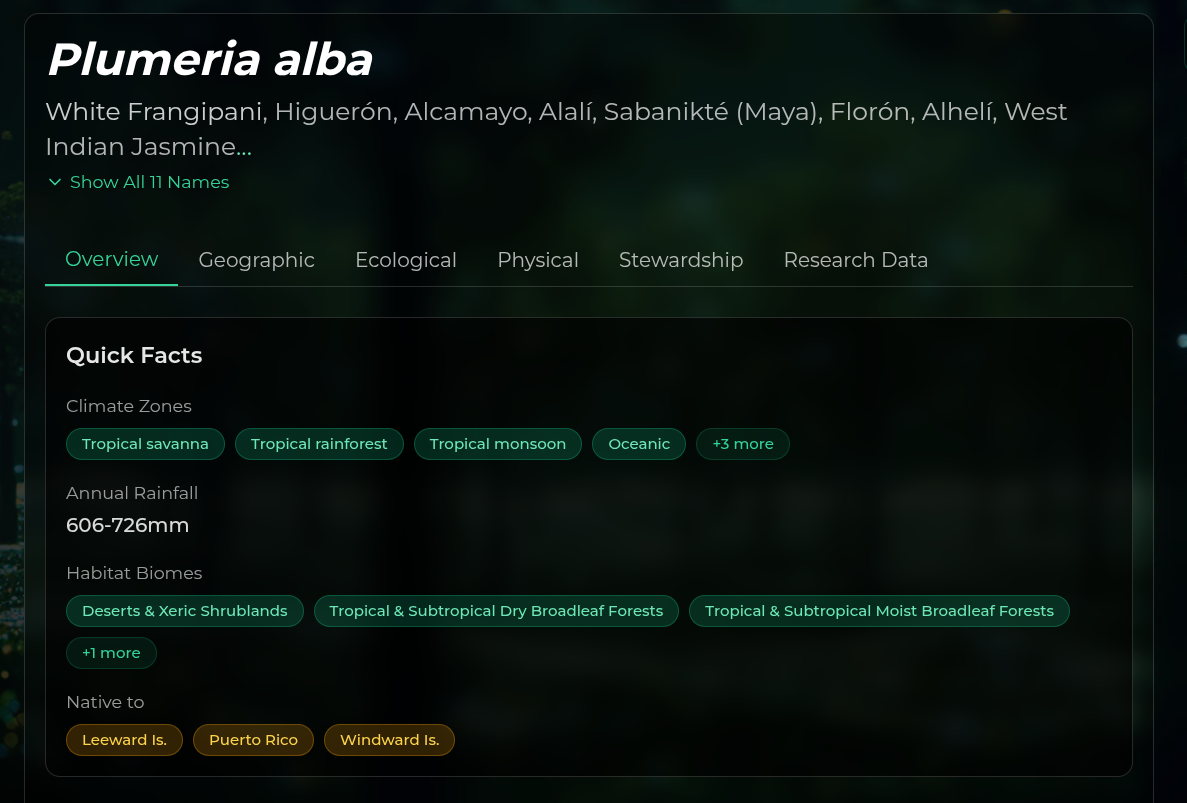
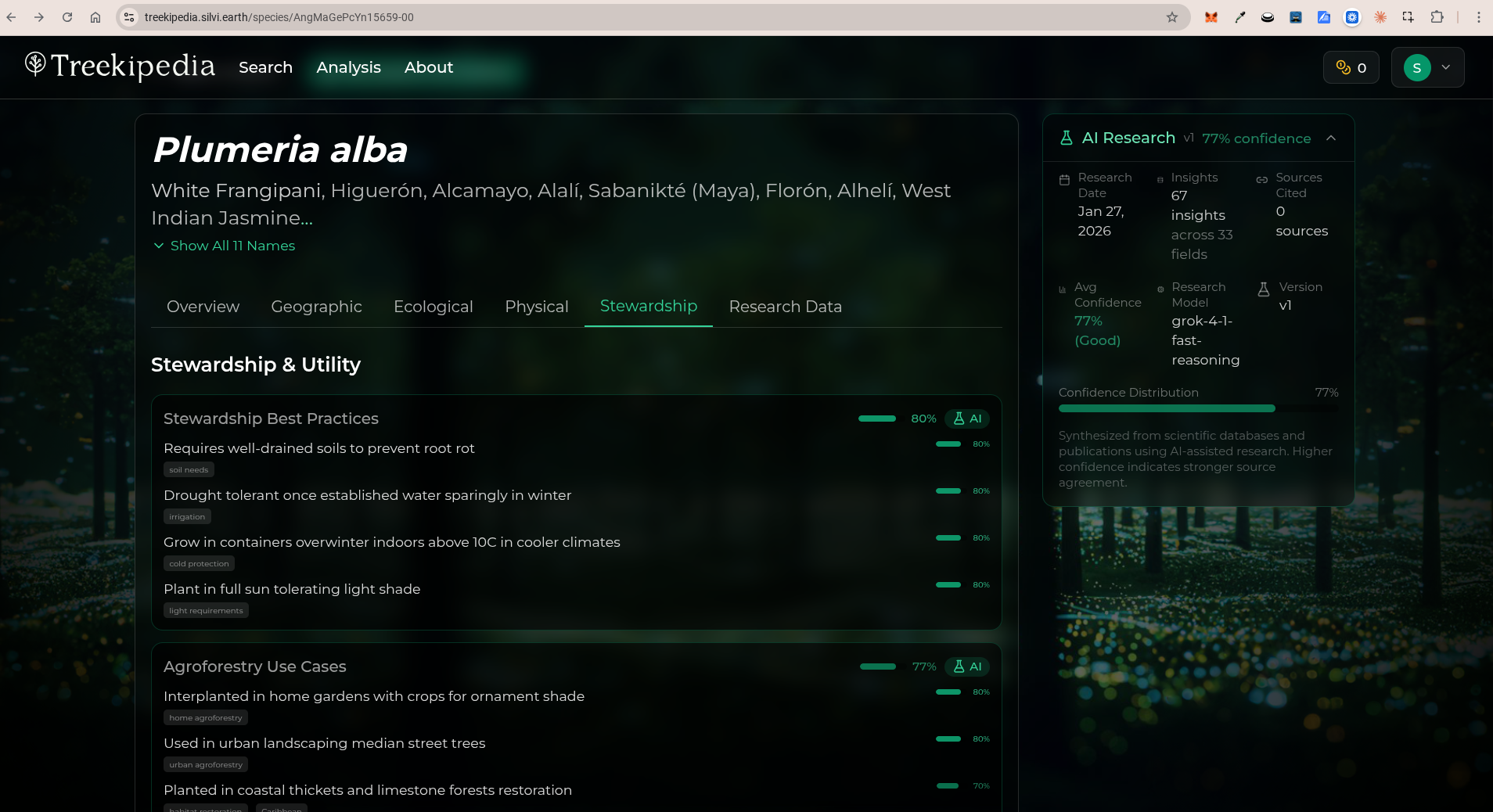
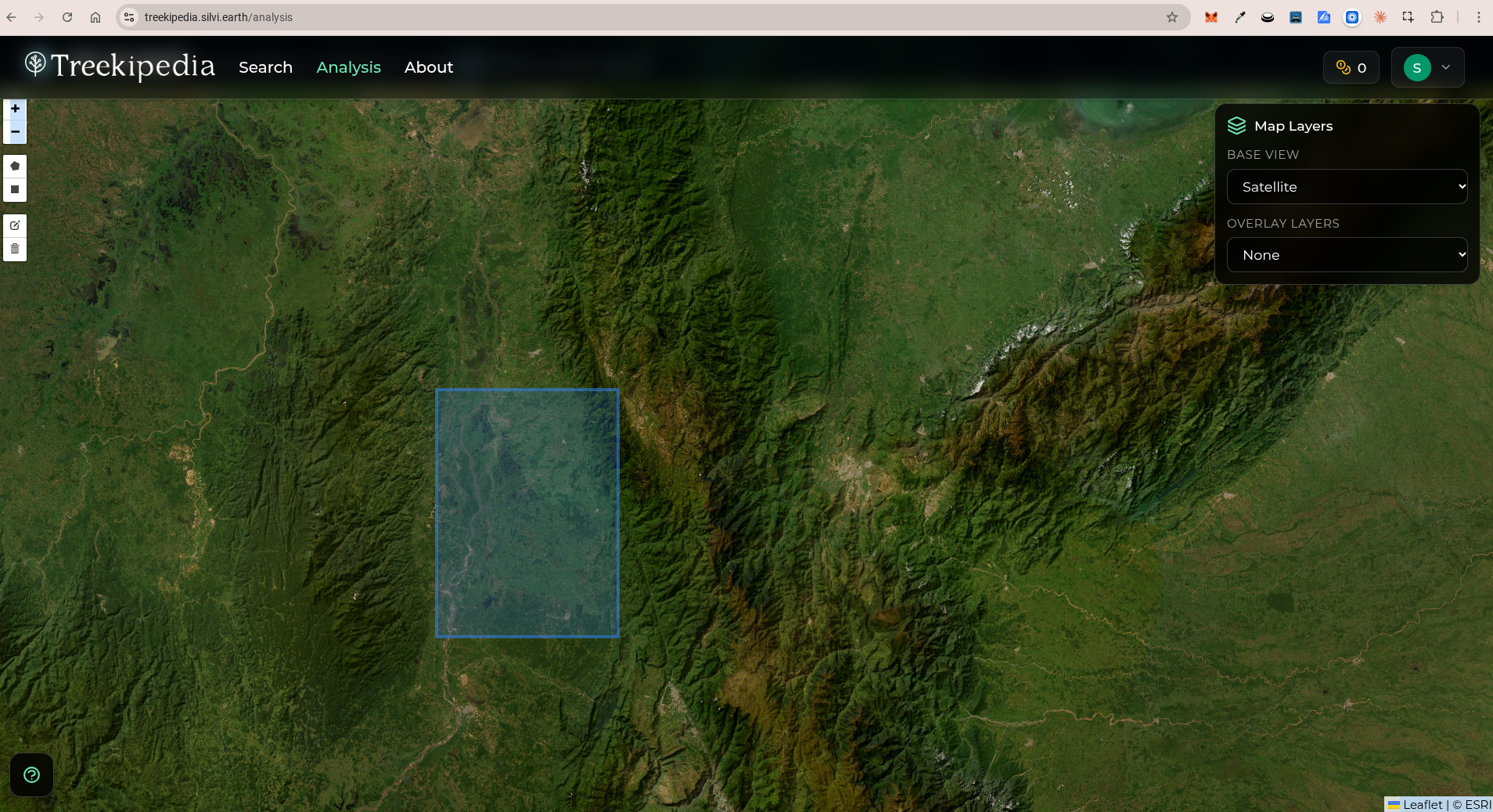
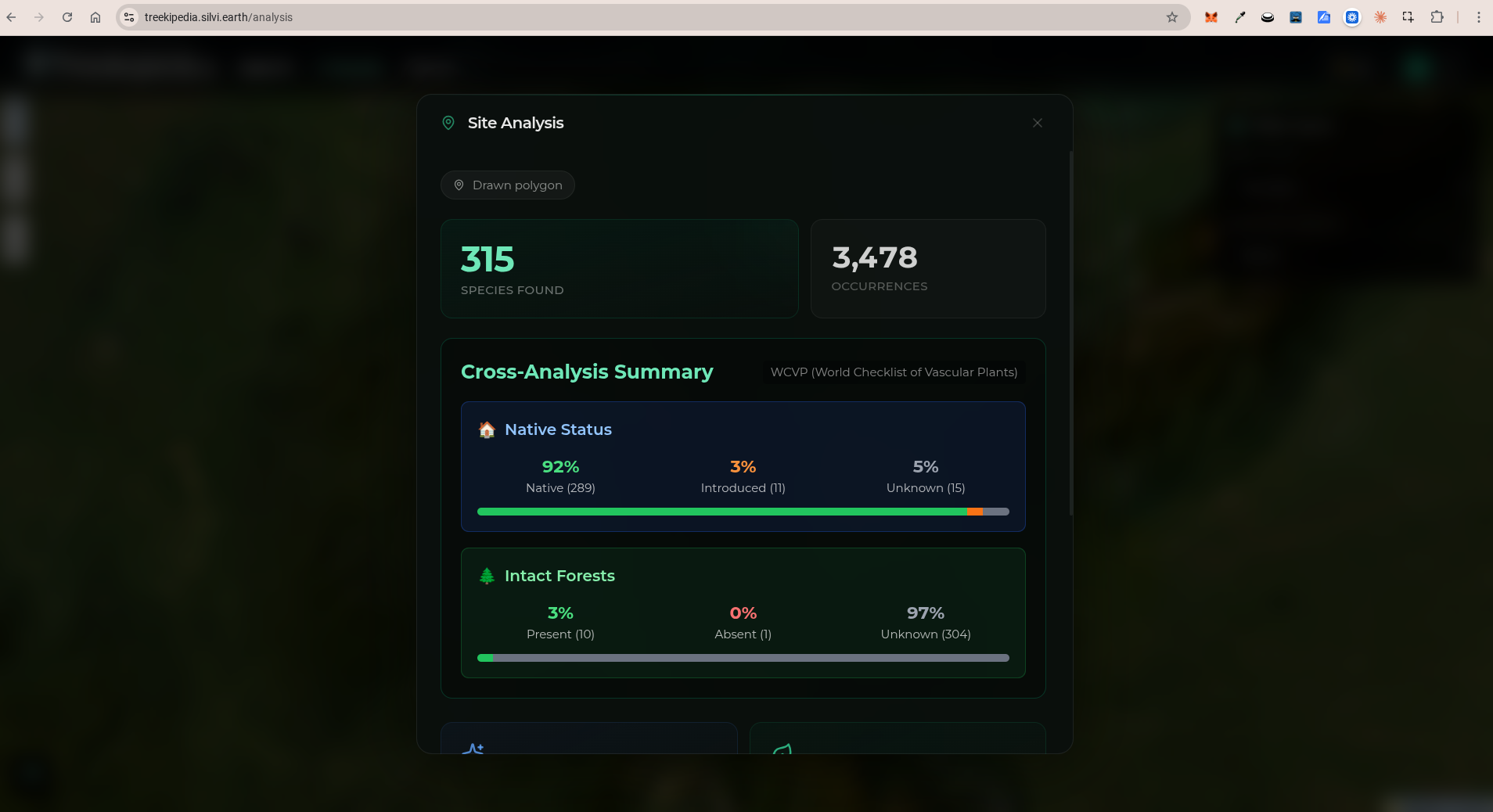
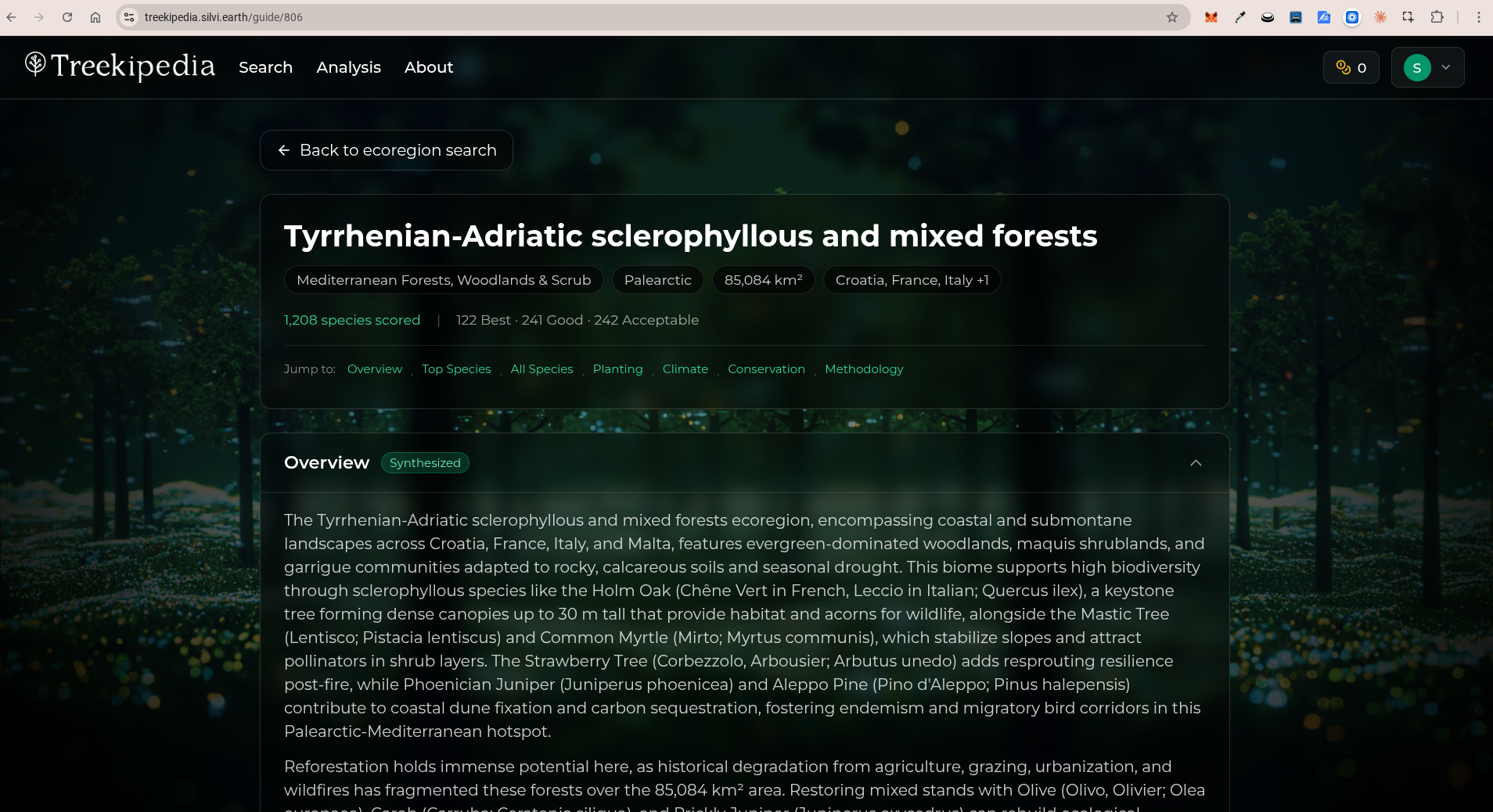
I lead a team of four on Treekipedia, Silvi's reforestation knowledge platform. We aggregated 96.5 million GBIF tree occurrences into 67,927 species, built an AI research pipeline that synthesizes species knowledge on demand, and shipped six product features to production: species search, async AI research, area assessment, neural-net species prediction, seven-strategy species recommendation, and planting-guide generation. Every one of them is built API-first, so agents can call them, not just humans.

96.5M

GBIF occurrences

67,927

Species

6.46M

Geohash tiles

847

Ecoregions

01 / 07Homepage, search across 67,000+ tree species and subspecies
Inside the systemL.E.A.F. scoring fused with a neural predictor across seven strategies

The recommendation engine fuses L.E.A.F., an occurrence-affinity score I built over per-ecoregion species tiles, with a SINR v54 neural predictor and AlphaEarth satellite embeddings, weighted per strategy across seven restoration strategies from rewilding to agroforestry. The result: draw a polygon anywhere on Earth and get a ranked, ecologically defensible species list with a planting guide. Numbers above are from the July 2026 production snapshot. I'm the technical lead at Silvi.

Stack

Next.js 15·React 19·Tailwind 4·Mapbox GL·Hono + Zod + Kysely·PostgreSQL + PostGIS·pgvector·Python Flask·AlphaEarth·Kimi


A Knowledge Substrate That Learns What Works on Land

Regenerative Intelligence

RI is the knowledge system I designed and built for Silvi: a single substrate that holds what is true about land (places, species, traits, interventions, outcomes) and serves it to every application through one API. Everything reduces to five primitives, with a hard line between what a source asserted and what the system derived, so two institutions can hold different beliefs over the same evidence. It ingests the world's data by translation rather than adoption: a 494-million-record GBIF pull became 282 million occurrence-tile rows, conserving every occurrence exactly.

3.4M

Statements

2.6M

Beliefs

282M

Occurrence tiles

0.929

Predictor AUC

The data model

EntityA noun

a place, taxon, intervention, strategy, actor

StatementA claim

immutable, content-addressed, no truth value alone

EventThe ledger

where time and provenance actually live

BeliefA stance

likelihood and weight, computed, never asserted

ComputationDerived

tiles, envelopes, scores, all regenerable

Inside the systemfive primitives, a rebuildable 85 GB substrate, a learned predictor

The database is deliberately disposable: it rebuilds byte-identical from pinned sources, gated by seventeen structural invariants, golden sets, and an envelope oracle. On top of the occurrence census sit 119,448 species environmental envelopes, a strategy composer with 35 intervention atoms, and a learned distribution predictor that beat the envelope baseline on all six evaluation species (mean AUC 0.929 vs 0.908). The API serves species resolution, place assessment, and recommendation today, and Treekipedia's frontend has been rebuilt as a pure consumer of it. Figures are from the August 2026 substrate report.

Stack

PostgreSQL 16·PostGIS + pgvector + H3·Hono + Zod + Kysely·Node 22·Python·systemd + Cloudflare Tunnel


An Open-Source Autonomous Trading Agent

Plutus

Plutus is a seven-agent trading desk, MIT-licensed and public: a portfolio-manager agent orchestrating perception, regime, prediction, generation, and reflection specialists, with ops on thirty-minute bookkeeping ticks. Strategies must graduate on a verified prediction track record before they may trade real money; conviction then sizes positions through risk-budget bands, and execution is deliberately not an agent: trades go through a deterministic tool. It runs live on Hyperliquid, or research-only without wallets. The code is open; every operator's runtime stays local and private.

7

Agents on the desk

160+

Commits since June 2026

225K

Lines of Python

1:1

Code-to-test ratio

The trading desk

mainOrchestrator

the PM and operator voice; places trades via a tool

perceptionMarket state

what is happening, continuously

regimeConditions

what kind of market this is

predictTheses

graded forecasts with track records

generateStrategies

candidates that must graduate to trade

reflectLearning

what the outcomes actually taught

opsBookkeeping

thirty-minute integrity ticks

Inside the systemseven agents, a graduation gate, deterministic execution

The repo is the whole harness: the agent loop, memory manager, multi-provider LLM abstraction, gateway, sessions, full-text and vector search, and the trading domain: lifecycle, perception, strategies, conviction, calibration. Roughly 225,000 lines of Python with a near one-to-one code-to-test ratio across 702 test files, committed daily since June 2026. A hiring engineer can go read it, which is the point.

Stack

Python·uv·SQLite·Hyperliquid·Multi-LLM provider layer


Also·Other Shipped Work

Mind Meld interface

Mind Meld

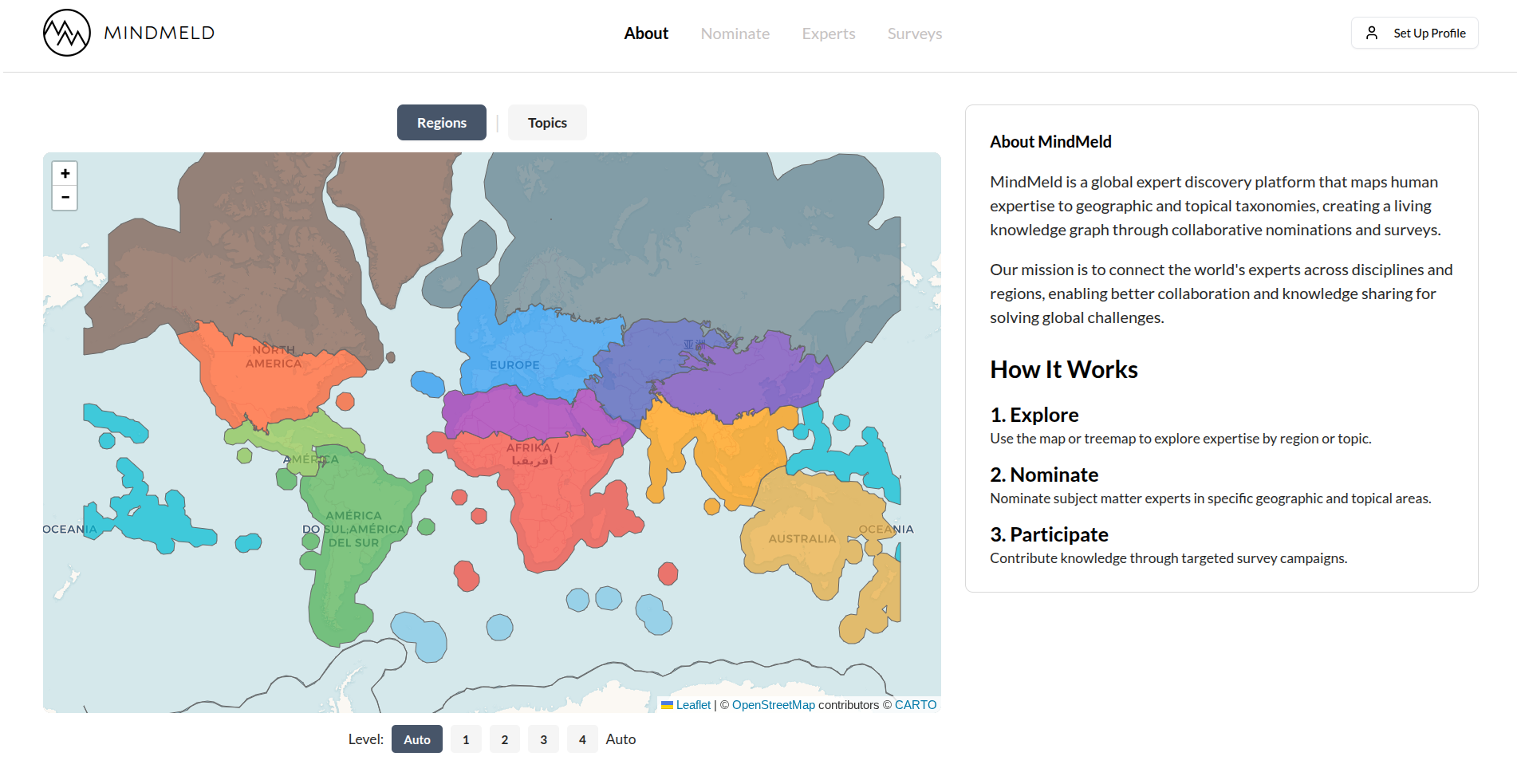
An expert survey platform delivered to One Earth. Interactive globe and treemap across a four-level geographic hierarchy (8 realms to 847 ecoregions) and a four-level topic taxonomy. $3,375 invoiced across MVP plus follow-up, client returning for more work.

NatureDataLab homepage

NatureDataLab

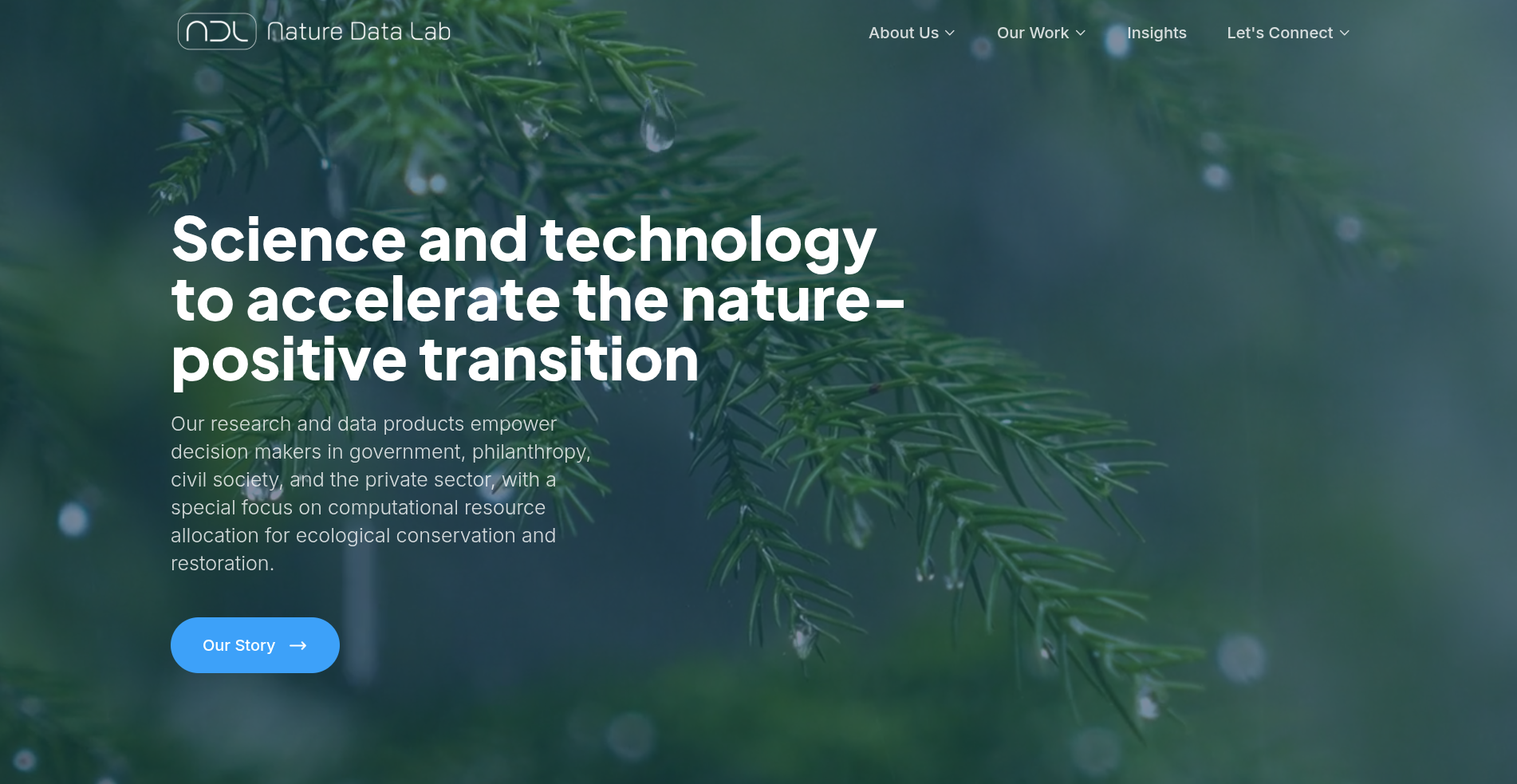
A content platform for Karl Burkart's science-and-technology initiative. Currently mid-migration from Storyblok to Payload CMS.

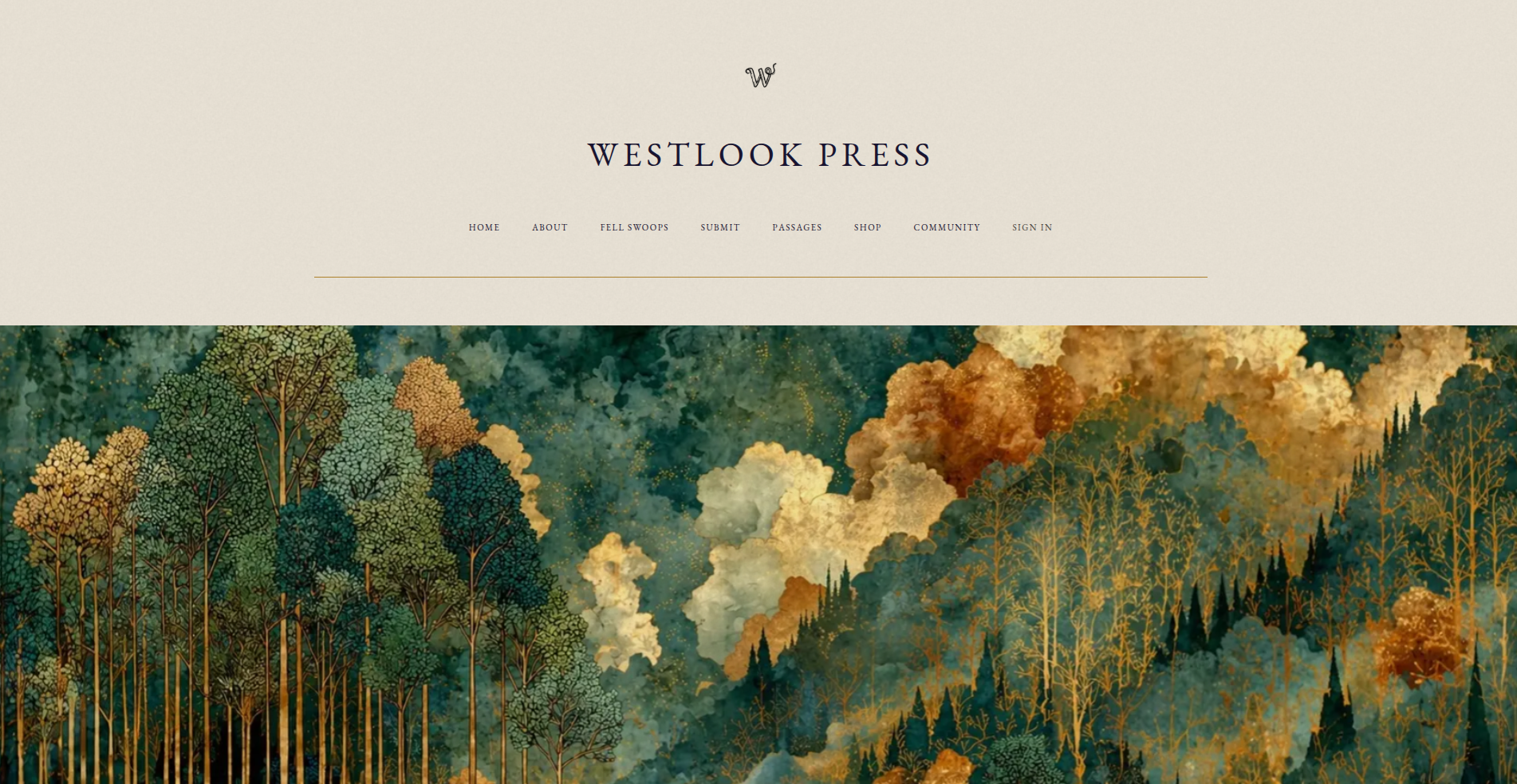
Westlook Press homepage

Westlook Press

A literary publishing site for the writer Kristin Ellowe, built in a weekend. Sebastian now maintains it autonomously.

Previously

ggbots.ai was an autonomous AI trading platform I solo-built and ran through mid-2026: users described a strategy in plain English and deployed a bot that ran it 24/7. At the final platform snapshot (16 July 2026) it had 397 registered users, 28 paying customers, and 8,500+ automated trades. Decommissioned July 2026; its lessons live on in Plutus.

And·When Nobody Is Paying

Personal AI Butler

Sebastian

Sebastian is a 24/7 autonomous agent who runs the operational layer of my life. He lives on a Hetzner box under systemd, talks to me through Telegram, and works a seven-beat daily rhythm over a manor-shaped file architecture, with his task board in a self-hosted SQLite state layer. His personality is modelled on the butler from Black Butler: dry wit, eloquent vocabulary, unflappable under pressure. He maintains two production sites autonomously, reads my team's meeting notes, manages my calendar, and keeps files on everyone I know. He is what agent engineering looks like when nobody is paying for it.

24/7

Availability

7

Daily heartbeats

2

Production sites maintained

13+

Integrations

The autonomous loop

07:07Garden

orient, plan the day

09:37Study

comms, content, coordination

12:07Observatory

market conditions research

14:37Workshop

execute the task board

17:07Cellar

infrastructure diagnostics

19:07Ledger

chronicle the day

22:07Library

curate, dream, close out

Inside the systemClaude Agent SDK, seven daily heartbeats, runs on Telegram

Sebastian runs on seven daily heartbeats, each tied to a room in a manor file architecture I designed: morning orientation, communications, observation, execution, diagnostics, accounting, and library curation. The system is built on Bun and TypeScript for the Telegram bot, Python for the heartbeat scripts, and the Claude Agent SDK for the agent runtime itself, all under systemd on a Hetzner box with the task board in a self-hosted SQLite state layer.

Concretely, Sebastian maintains Westlook Press for the writer Kristin Ellowe. She emails him with change requests, he triages them onto his task board, works them, and ships changes to Vercel autonomously. He ships NatureDataLab bug fixes from Telegram messages I send him. He manages my calendar and task board, drafts articles, reads Silvi team meeting notes and recaps priorities to the group chat, maintains a second brain with files on people, and helps with day-to-day prioritization and long-term strategy.

Stack

Claude Agent SDK·Bun·TypeScript·Python·MCP·Telegram·Google Workspace MCP·Playwright·grammy·Telethon·Hetzner·systemd·SQLite


03·Proficiencies

The Toolbox

What I reach for, grouped by where in the stack they sit.

Core stack

TypeScriptPythonSQLNext.jsReactAstroFastAPINode.jsExpressHonoKyselyPostgreSQLPostGISpgvectorSupabaseNeonDrizzlePayload CMSTailwindMapbox GLRedisBunPlaywright

AI & agents

Claude CodeClaude Agent SDKClaude APIMulti-agent orchestrationOpenRouterMCPPineconeComfyUI

Web3

SolidityHardhatwagmiviemRainbowKitEASIPFSHyperliquidCeloBaseOptimismArbitrum

Platforms

VercelHetznerDigital OceansystemdGoogle CloudCloudflareTelegram botsStripeResendZapier

Work & docs

LinearNotionMiroCanva

04·Contact

Let's build something.

I'm relocating to Dublin and looking for AI engineering roles with Irish-registered employers. Building and running agents in production is what I do all day. On-site or hybrid in Dublin both work, and my salary requirement clears the Critical Skills Employment Permit threshold, which makes sponsorship straightforward.

Built with AI, obviously.